choreloop › Guides › Home Maintenance › Inspect Foundation & Drainage Grading
Inspect Foundation & Drainage Grading
FoundationExteriorSeasonalEvery 6 months
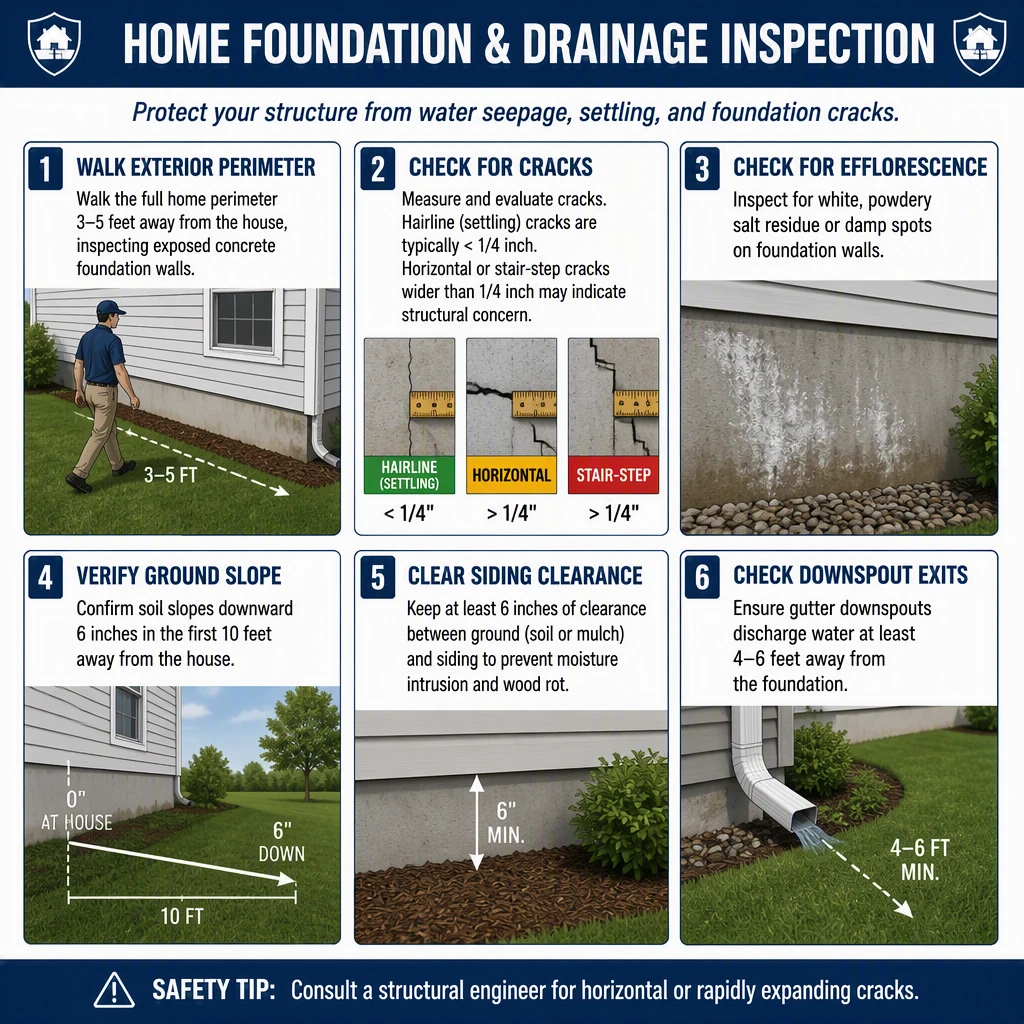
Look for foundation cracks, pooling water, and grading problems that could lead to water intrusion, mold, or basement flooding.
Supplies You'll Need
- Flashlight
- Tape measure or ruler
- Notepad
⚠️ Safety Warnings
- Horizontal cracks or cracks wider than 1/4 inch should be evaluated by a structural engineer or foundation specialist.
- Pooling water near the foundation is the #1 cause of basement moisture and structural settling issues.
Step-by-Step Instructions
- Walk around the full exterior of your home, keeping a few feet away from the wall.
- Scan the foundation for cracks. Measure and note any horizontal cracks, stair-step cracks in brick, or cracks wider than 1/4 inch.
- Check for new water stains, efflorescence (white powdery residue), or damp spots on concrete or basement walls.
- Verify the soil slopes away from the foundation — use a ruler or tape measure if unsure about the grade.
- Look for soil erosion near downspout exits and check if mulch or sod blocks proper water drainage.
- If water pools during rain, plan to regrade soil or extend downspout splash blocks before the next storm season.
💡 Pro Tips
- Ground should slope away from the house at a rate of 6 inches in the first 10 feet.
- Small hairline vertical cracks in concrete are usually normal settling — monitor them over time for widening.
Track this chore automatically
choreloop reminds you when it's due — free, no account needed.
Open choreloop
choreloop reminds you when it's due — free, no account needed.
Open choreloop