choreloop › Guides › Home Maintenance › Clean, Lubricate & Inspect Garage Door
Clean, Lubricate & Inspect Garage Door
GarageSeasonalEvery 6 months
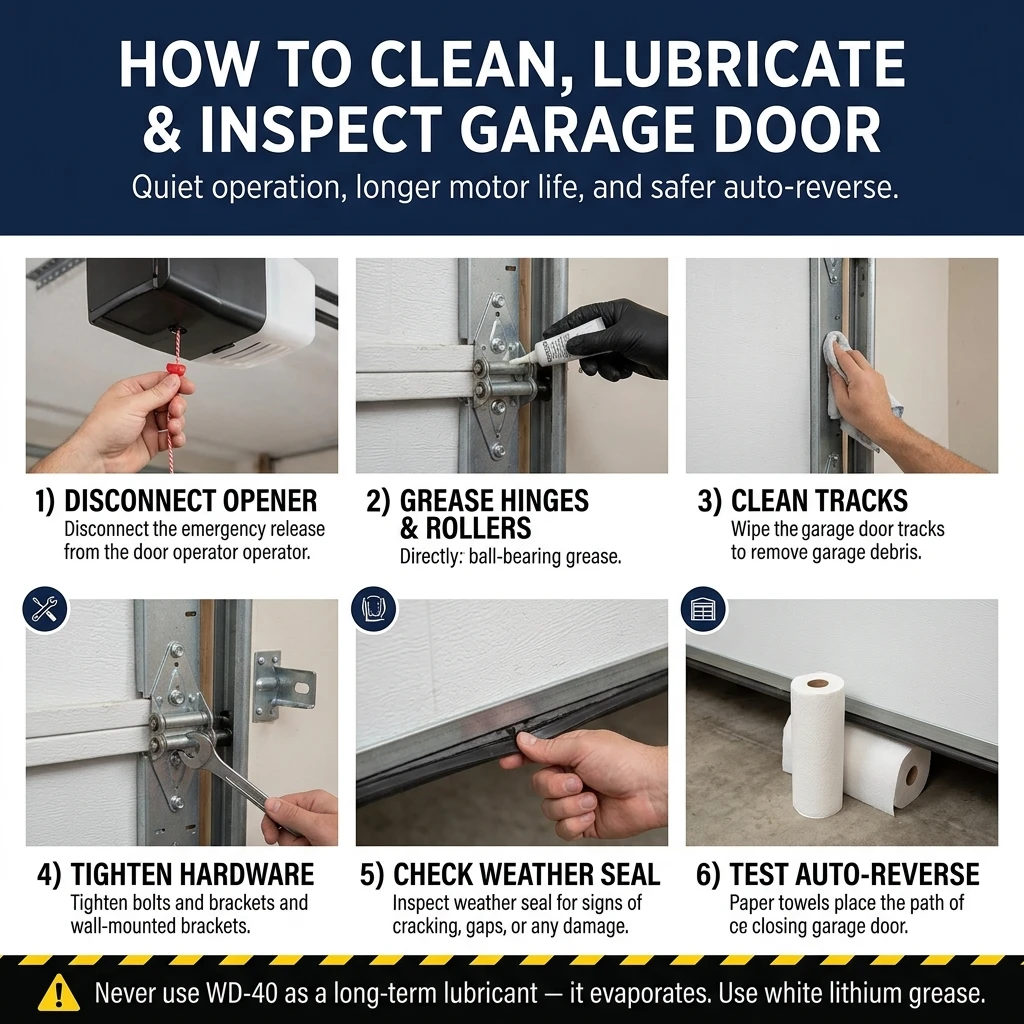
Oil moving parts, tighten hardware, and test the auto-reverse safety feature to prevent late-night breakdowns and injuries.
Supplies You'll Need
- White lithium grease or silicone spray lube
- Phillips and flathead screwdriver
- Socket wrench set
- Clean rags
⚠️ Safety Warnings
- Disconnect the garage door opener before working on springs or cables.
- Do not use WD-40 as a long-term lubricant — it is a solvent, not a grease, and will evaporate.
Step-by-Step Instructions
- Close the garage door fully and disconnect the opener by pulling the emergency release cord.
- Apply lithium grease to all hinges, rollers, and pivot points on both door sections.
- Wipe the metal tracks clean with a rag and leave them ungreased — lubricant attracts grit, and rollers need to grip the track.
- Tighten all exposed bolts on the door sections, opener rail, and wall brackets.
- Inspect the rubber weather seal on the bottom of the door for cracking or gaps.
- Lubricate the opener chain or screw drive per the manufacturer's instructions.
- Reconnect the opener, place a roll of paper towels in the door's path, and close it — the door should automatically reverse when it touches the obstruction.
💡 Pro Tips
- Lubricate once or twice a year for quiet, smooth operation and longer opener motor life.
- Modern garage doors with built-in auto-reverse still need manual testing — never assume it works.
Track this chore automatically
choreloop reminds you when it's due — free, no account needed.
Open choreloop
choreloop reminds you when it's due — free, no account needed.
Open choreloop